Into the Bowl
The Eden Project sits in a hole in the ground. That’s not a criticism. It’s quite literally true. The site was a disused china clay pit near St Austell, and in the late 1990s it was a barren, flooded crater with no soil and no obvious future. Then along came Tim Smit — the man who had already rescued the Lost Gardens of Heligan from decades of neglect — with a plan. The result opened in March 2001 and welcomed its millionth visitor by June of the same year. So I guess it caught on. By now, over 20 million people have made the trip down into the bowl.
 Minimus and I had pre-booked an 11am entry slot the day before. This was prudent. The drive up to Eden Project from Marazion on the A30 was its usual self — busy, with roadworks adding a generous helping of delay. We arrived about half an hour late. Nobody minded. The site was busy but far from heaving, possibly because it wasn’t school holiday week. Possibly also because the weather was resolutely uncooperative. Drizzly, grey, and breezy. Frankly ideal conditions for spending the day inside a pair of warm biomes.
We walked down the hill into the bowl and headed straight for the Rainforest Biome.
A Whole Rainforest. Under a Roof.
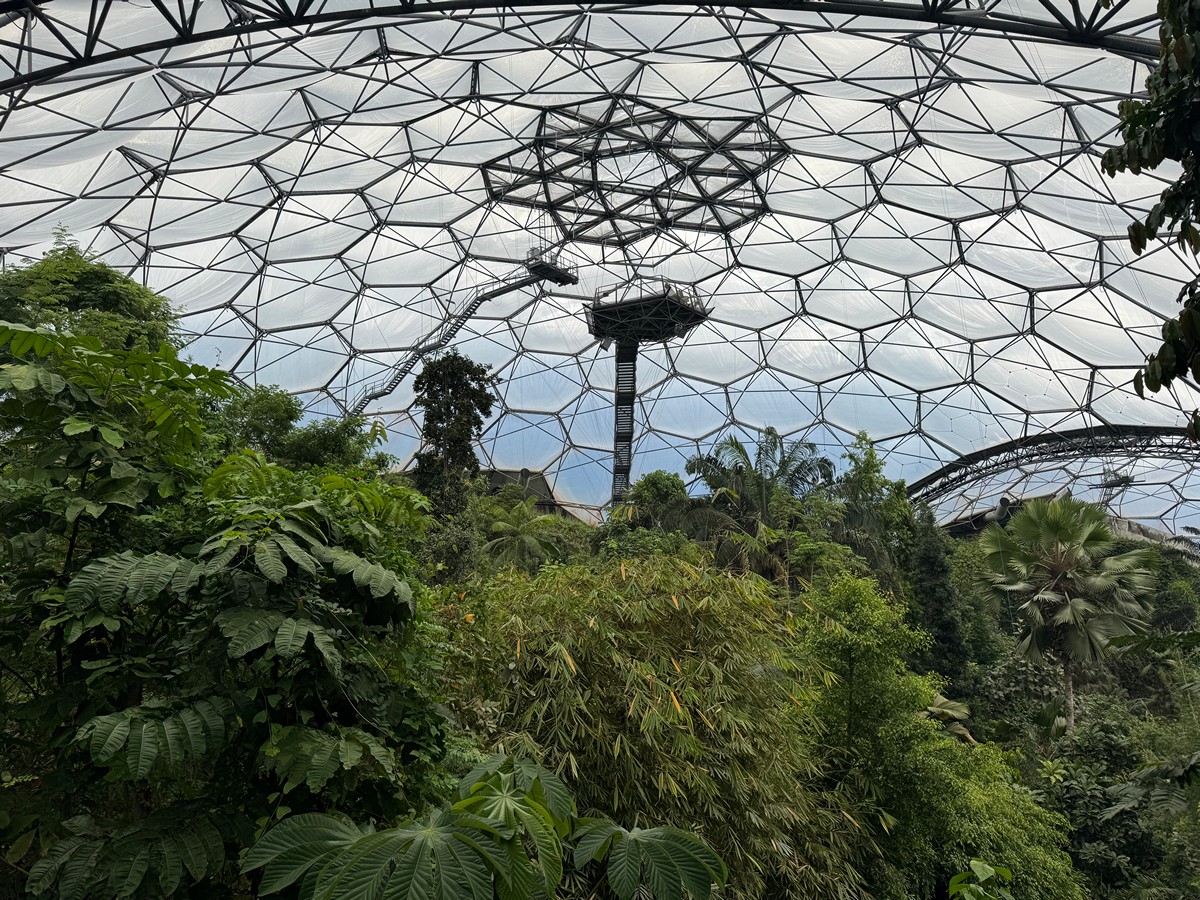
The Rainforest Biome is the largest of its kind in the world. It’s 55 metres high — picture eleven double-decker buses stacked vertically, or the Tower of London with room to spare — and covers the equivalent of two football pitches. The structure is a steel frame clad in hexagonal ETFE cells, a plastic film lighter than glass but strong enough to hold the weight of a car. The hexagonal shape wasn’t arbitrary. It was modelled on soap bubbles, chosen because it adapts naturally to irregular surfaces. The old clay pit is nothing if not irregular.
The biome covers flora from the Amazon, the Congo, South-East Asia, and beyond — the full tropical roster. Inside, the temperature sits between 18 and 35°C. It was towards the upper end on our visit. My jumper came off early. It’s ambitious. It delivers. I’d last visited in 2005. The plants were smaller then. They’ve had another twenty years to get on with it, and they’ve made the most of the opportunity.
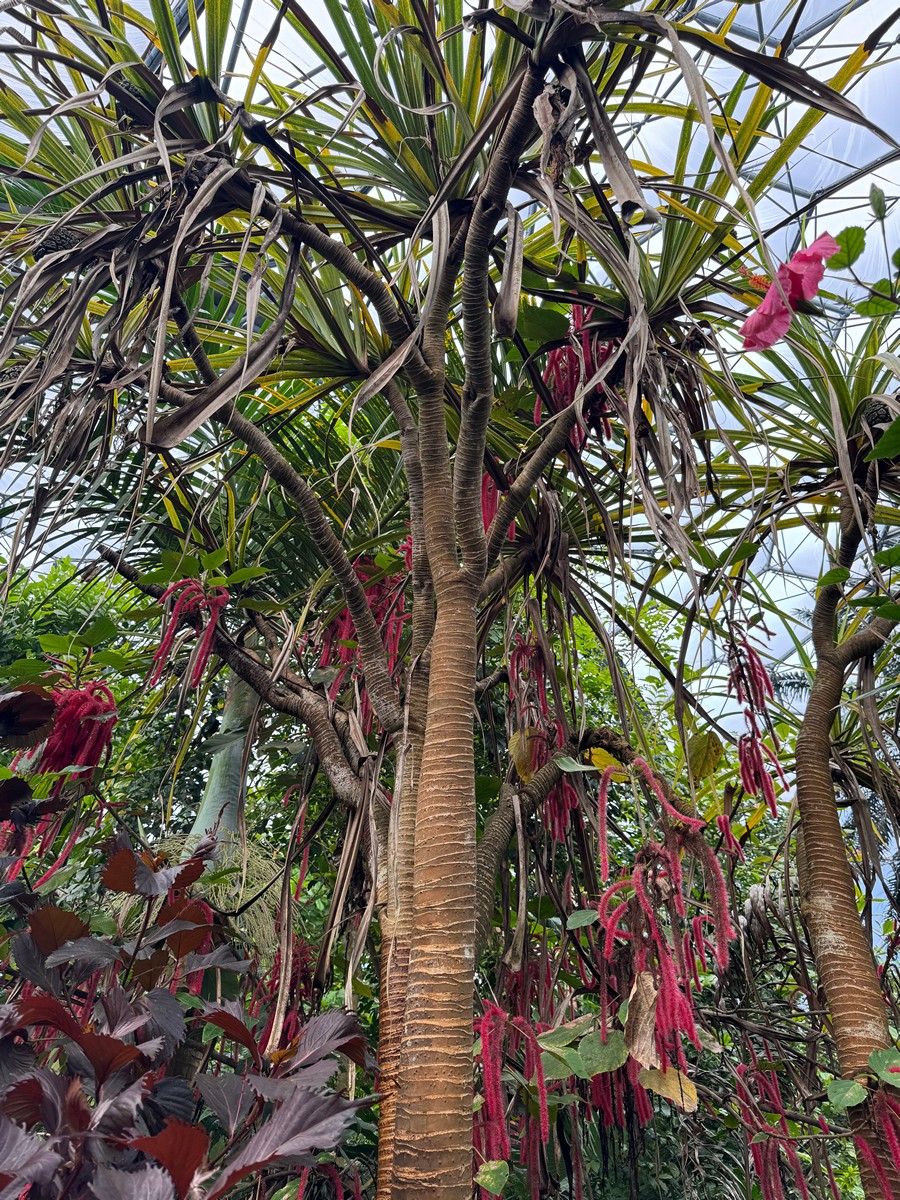 The biome now houses over a thousand rainforest plant species — rubber trees, cacao, giant bamboo, banana plants — sourced from botanic gardens and research stations around the world. The first trees went in as recently as September 2000, six months before opening. They had to start somewhere. An area of rainforest the size of the Rainforest Biome is destroyed every eleven seconds. Eden doesn’t let you forget that. It’s written into the exhibits and the planting and the whole design of the place. It’s a message dressed up as a day out. And it works.
Up in the Canopy
One thing that wasn’t there on my 2005 visit is the Canopy Walkway. It opened in phases from 2013 onwards, and it’s worth every one of the steps it takes to get up there. There are two bridges at the top. One is a broader, accessible Cloud Bridge, where misting systems periodically release swirling clouds around you — a reasonably accurate simulation of what actual rainforest cloud cover does to visibility. The other is a 23-metre rope bridge, narrow and moving, strung between two of the tallest trees in the biome.
We did both. The rope bridge wobbles. That’s the point. At the top, the heat is noticeably more intense — all the warmth in the dome rises and collects up there. The views across the canopy are genuinely impressive. It doesn’t feel like Cornwall. It doesn’t feel like England. In fact it barely feels like the planet you arrived from. We loitered for quite a long time on the Cloud Bridge. And after we’d crossed the rope bridge we went back for a second loiter. The clouds were quite refreshing.
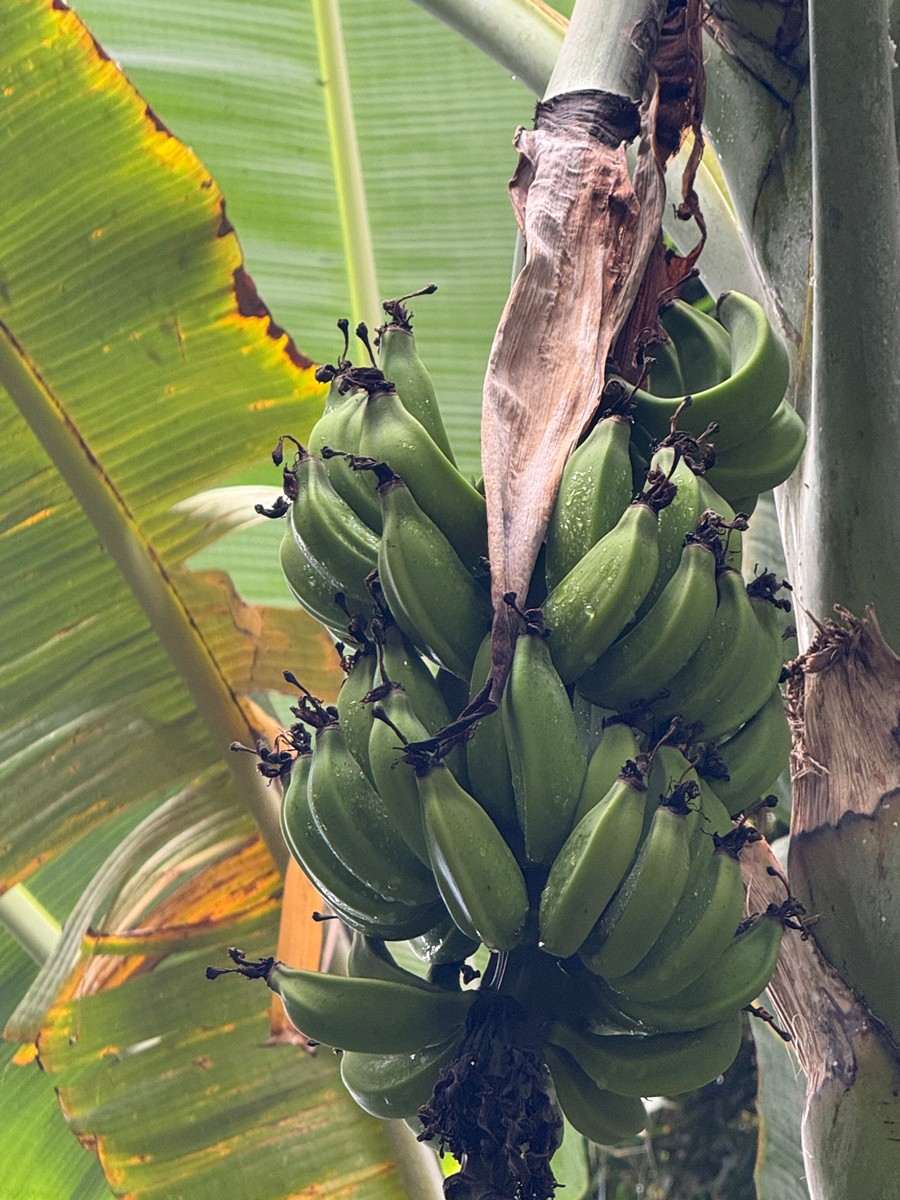 There’s also a Rain Shack, where you can shelter from a simulated tropical downpour, and a Carbon Platform explaining how the growing forest locks away CO2. The whole walkway is essentially a lesson in how rainforests keep the planet functioning, delivered from the treetops. As educational approaches go, it’s more effective than a leaflet.
Lunch Break
By the time we emerged, lunch felt well-earned. The Eden Project café leans into its theme. The menu runs to curries, salads, and sandwiches built around tropical and Mediterranean ingredients. It’s the kind of food that nods meaningfully at the exhibits around you. What we had was good. Genuinely good. The sort of lunch that makes you think the place has put as much thought into its catering as its engineering, which is either impressive or slightly unsettling depending on your expectations.
Above the café is a shop, and we visited that too. It would have been rude not to. The Eden Project grows cacao in the Rainforest Biome, and the shop is not shy about reminding you of this fact. We emerged with gifts. The majority of them were, if I’m being honest, chocolate-based.
The Warm and the Dry
The Mediterranean Biome is smaller — 35 metres high, 135 metres long — and noticeably different in atmosphere. Where the Rainforest Biome hits you with heat and humidity the moment you walk in, this one is cooler and drier. It covers warm temperate regions: the Mediterranean basin, Southern California, South Africa, Chile, south-west Australia. Places where olives grow and summers are reliably hot and dry. Grapevines, tobacco, cotton, citrus — it’s a different kind of abundance.
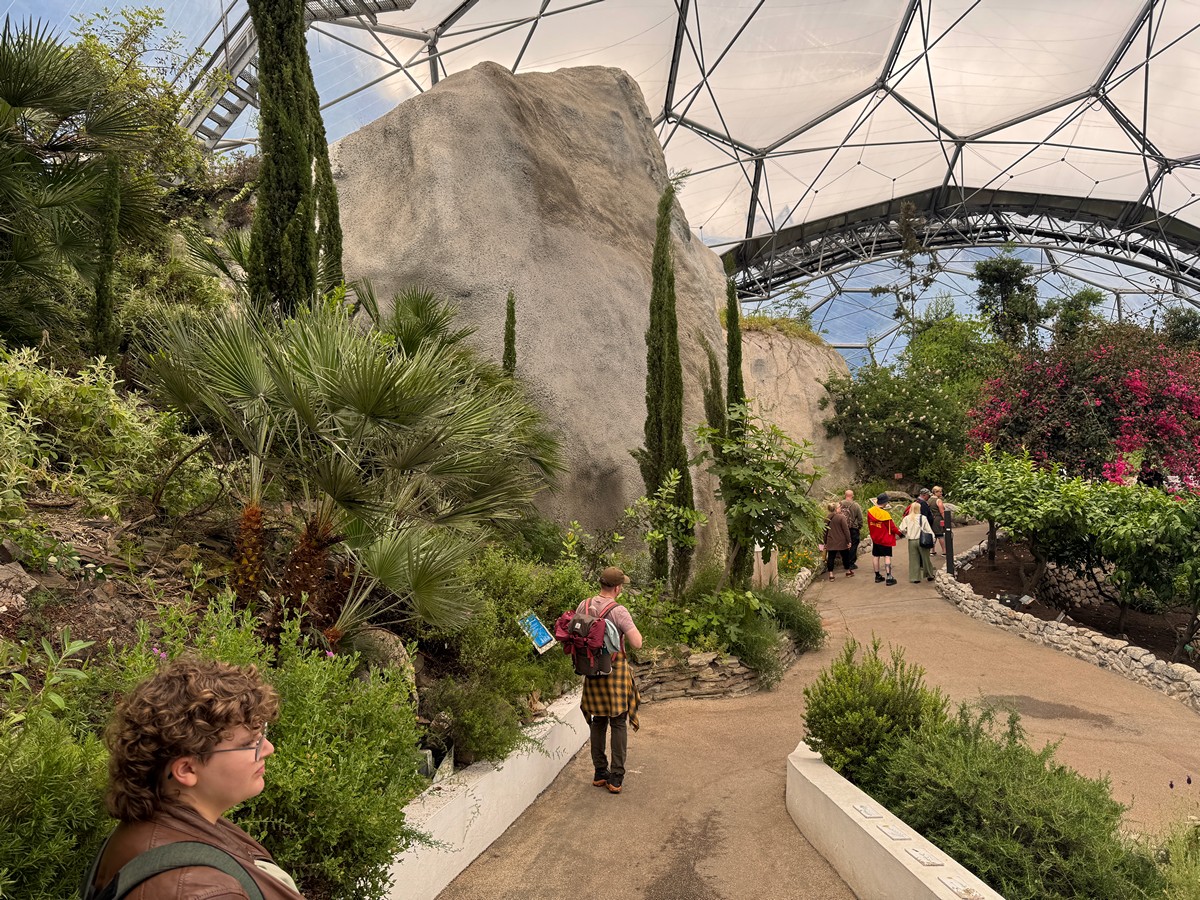 The biome features a six-metre steel statue of Dionysus, the Greek god of vines, which feels appropriate. He looks like he’s been waiting for someone to bring him a glass of the local produce. The planting is quieter in tone than the rainforest next door. Less theatrical, more considered. But the contrast between the two is part of the argument Eden is making — that plants shaped human civilisation, and that the variety of ways they did so is worth understanding.
Back Up the Hill
We came out around 3pm. The rain was still at it, in a mild, persistent, Cornish sort of way. We found a covered spot, got our books out, and sat quietly for a while. I ensured that the packaging from the chocolate I bought never made it offsite. Minimus had acquired rather more than I had, but most of it was earmarked for friends later in the week, which shows considerably more restraint and generosity than I managed. Sometimes the best part of a big day out is the moment you stop and let it settle. Especially if you have chocolate.
The walk back up to the car was gentle. The rain was light enough to ignore. We drove back to Marazion with enough time for a short restorative snooze before the important business of dinner.
Home and the Cutty Sark
That evening we went to the Cutty Sark in Marazion. After a day of tropical biomes, rope bridges, and epic civil engineering, a decent meal and somewhere to sit was all the ambition either of us had left. It was, on reflection, entirely sufficient.